
Ciara Hayes is a statistician working with the CSO's Historical Statistics Recovery Programme, which has played a key role in digitising historical tables and maps from our archives, particularly related to Census 1901, 1911, and 1926.
On 18 April 2026, the 1926 census forms were released to the public under the 100-year rule, sparking widespread interest as people searched for their ancestors and pieced together personal stories from a century ago. At the Central Statistics Office, we have been working on the digitisation of the lesser-known statistical tables from the same census, as part of our
While individual census forms capture the stories of households, the statistical tables aggregate those records into a broader portrait of the population, broken down by detailed geography. Individual census records in Ireland are protected by a strict 100-year privacy rule. The statistical tables, however, were not subject to any such restriction. The preliminary report was published just four months after census night in April 1926, and the first full volume of tables followed two years later, in 1928. Both were compiled and published by the Department of Industry and Commerce, the predecessor of the CSO which ran the census operation in 1926.
The processing of the 1926 data represented a significant technological undertaking. This was the first year that punch card technology was used in Ireland to tabulate census data. Clerks translated the information from each household form onto a physical card, which was then mechanically sorted and tabulated. The final tables were published sequentially by volume, each dedicated to a specific theme, with statistics provided at multiple geographic levels – from national levels down to townlands.
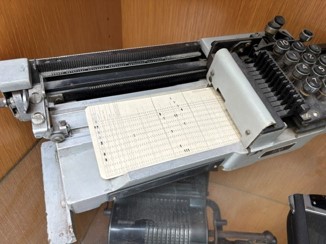
For most of the past century, these tables existed as physical volumes in libraries and archives which were available in principle, but difficult to access in practice. The CSO’s HSR Programme addresses this through a three-step approach: make the tables more readily available, make them accessible, and publish them.
We are scanning the original published volumes and applying Optical Character Recognition technology to make the text searchable, with permanent archiving planned through the Digital Repository of Ireland (DRI). We are also publishing a selection of statistical tables using modern dissemination tools and techniques to allow for greater accessibility and interactivity. PxStat, the CSO's online open data platform, now has a selection of tables from the 1911 and 1926 censuses already available. Users can build custom tables, filter by variable, and isolate data at county, district or District Electoral Division (DED) level. We have digitised the historical boundary lines at each of these levels, enabling the data to be mapped and explored visually – turning pages of numbers into a single, intuitive image. We contextualise the data further through analytical releases, including Then and Now: Life in Ireland in 1926 and 2022
The tables are a treasure trove of statistics, covering a broad range of topics including population, religion, Irish language, housing, and occupations. The occupations table alone offers a compelling picture of Ireland in 1926.
Of the 1.3 million people in gainful employment, 51% were working in agriculture. Leitrim was the most agriculturally dependant county, with 81% of its workforce employed on the land, closely followed by Mayo and Roscommon. By contrast, in Dublin City, Cork City, and Limerick City, industrial trades dominated, accounting for approximately a third of the urban workforce in each. Each city had its own distinct occupational profile. Compared with other parts of the country, Limerick stood out for food processors and grain millers, Dublin for its printers, publishers, and metal workers, and Cork for its boot and shoe industry.
Farming in 1926 was a family enterprise. Of 672,000 agricultural workers, 268,930 were recorded as farmers, supported by 206,382 sons and daughters assisting on family land and a further 57,713 other relatives.
The gender composition of the workforce is equally revealing. Women accounted for just 26% of those in employment. Across 63 individual occupations, not a single woman was recorded. There was one female veterinary surgeon in the country, three female solicitors, and two female builders. Conversely, just only a few occupations recorded no men at all, such as hand lace workers, midwives, milliners, and embroiderers.
The 1926 census statistical tables are a statistical portrait of a young state, shaped by agriculture, religious identity, and local community. The HSR Programme's objective is to preserve these records and to make them openly accessible to historians, researchers, students, journalists, and members of the public - searchable, mappable, and downloadable. There are stories in these tables that have not yet been found. We invite you to explore them.
| Press Office | (+353) 21 453 5028 |
|---|---|
| pressoffice@cso.ie | |
| ciara.hayes@cso.ie. |
Learn about our data and confidentiality safeguards, and the steps we take to produce statistics that can be trusted by all.
Copyright Notice
The author of this article holds the copyright for this material. The content of the article is licensed under Creative Commons Attribution licence (CC BY 4.0) for reuse or reproduction provided the source is acknowledged. For usage queries not covered by the CC BY 4.0 licence, please contact the author directly.